

Conflict management is a specifically human endeavor that requires constant attention, whether for the peace of nations and families or the success of any professional project. Unlike robots, we humans navigate a sea of needs, values, and perceptions that inevitably clash at some point. However, the key is not to avoid the collision, but to learn how to steer the ship.
In this first installment, we will focus on understanding and recognizing conflict. More than a battle, a crisis is—following its etymology—a decision and a change. It is an opportunity for growth, both in daily coexistence and in high-level professional performance and teamwork.
What is Conflict Management really?
Typically, conflict arises when two or more parties perceive that their needs are in opposition. It can be external (with a colleague) or internal (between what the head says and what the heart feels).
Main Characteristics
To manage a conflict, we must first understand its nature:
- Interdependence: Parties need each other; without a bond, there is no conflict.
- Mixed motives: There are always reasons to both compete and cooperate, even if stress makes us see only the competition.
- Subjectivity: There isn’t always an objective basis; sometimes the conflict lives only in our interpretation of facts.
- It is a process: It doesn’t appear out of nowhere. It requires time and goes through various stages before reaching a breaking point.
Common Types of Conflict
- Task conflict: Differences regarding content or resource allocation.
- Process conflict: Disagreements on how to execute the work.
- Relationship conflict: Incompatibility due to tastes, values, or interpersonal styles.
7 Key Ingredients for Conflict Management (Dudley Weeks)
Understanding what a problem is “made of” allows us to deconstruct it with precision. According to Dudley Weeks, these are the elements at play:
| Element | Description |
|---|---|
| Diversity | Differences in opinion or goals. It is healthy if used to explore new possibilities. |
| Needs | Conflict arises when needs are ignored, obstructed, or confused with mere desires. |
| Perception | We interpret reality differently. What one sees as an attack, the other sees as defense. |
| Power | The influence each party holds. Using power to “win” is usually a long-term disaster. |
| Values | Deep-seated beliefs. Sometimes we mistake a “preference” for a “principle.” |
| Feelings | Emotions (anger, fear) can cloud judgment if not properly managed. |
| Internal Conflicts | If I am not at peace with myself, I will project my problems onto others. |
The Space of Freedom: Stimulus and Response
There is a powerful phrase that makes all the difference in crisis management: “Between stimulus and response there is a space. In that space lies our freedom.”
Our biological response originates in the cerebral amygdala (the center for pure emotion), but rational control resides in the prefrontal cortex. Managing conflict consists of expanding that “space” so that the response is not a visceral reaction, but a decision aligned with our values and a higher “why.”
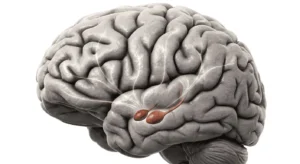
The amygdala (emotion) and the prefrontal cortex (reason): the space of our freedom.
Response Patterns: How do you react?
When faced with a problem, we tend to fall into automatic patterns. Let’s analyze the case of Vilma and the famous diaper commercial assigned to a team of advertisers. You are Vilma; you’ve landed the client, and you’re looking for savings, speed, and efficiency. Faced with pressure from a boss who wants results right here, right now, and a creative but stubborn colleague who wants to impose her idea for an expensive, colorful ad—what would you do?
- Conquest: “I’m right, you’re wrong.” You look for a loser, but you damage the future relationship.
- Avoidant: “If I ignore it, it will go away.” The problem usually festers in silence.
- Negotiator (superficial): You focus only on demands (numbers) but ignore the underlying human needs.
- Quick Fix (Band-Aid): A temporary solution that doesn’t cure the actual infection.
- Role player (Hierarchy): “It’s done this way because I’m the boss.” This kills creativity and the other person’s commitment.
The Thomas & Kilmann Dual Concern Model
The key to this conflict management model lies in balancing two dimensions: Assertiveness (concern for oneself) and Empathy (concern for others).
- Competitive: High assertiveness, low empathy. (Win/Lose).
- Accommodating: Low assertiveness, high empathy. (Yielding to maintain peace).
- Avoiding: Low in both. (Not addressing the issue).
- Compromising: Intermediate level. (Splitting the difference).
- Collaborating: High in both. (Win-Win). This is the ideal, though it requires more time and effort.
Summary: Constructive vs. Destructive Attitude
In conclusion, conflict management does not necessarily seek to make disagreement disappear, but to ensure it is not destructive.
- A constructive attitude brings serenity, clarity, improves relationships, and increases motivation.
- A destructive attitude generates stress, resentment, confusion, and, in the long run, poor physical and mental health.
Can you identify your natural tendency when facing a problem with a sibling, a friend, or a colleague?
In our next post, we will delve into resolution strategies and how to apply practical steps to turn conflict into a leadership tool. A successful and happy life depends on achieving good results in this area.
Wenceslao Vial





0 Comments